Is That Nest Under Your Porch Eaves a DIY Job or a Call for Wasp Nest Removal?
Wasps slipping in and out of a gap beneath your porch eaves usually means one thing: a nest is either built or under construction, and the traffic will only grow through the summer. A small, newly started paper nest that you can reach while standing flat on the ground is the only situation where DIY removal is reasonably safe. Anything overhead, anything the size of a softball or bigger, and anything tucked into a gap you cannot see into belongs to a professional.
Summer heat ramps up wasp activity and makes colonies more defensive, so waiting rarely makes the job easier. We get calls from Boston homeowners every July who tried a spray can from a ladder first. Here is how we size up the decision:
| Situation | Risk level | Our recommendation |
|---|---|---|
| Nest smaller than a golf ball, ground level | Low | Careful DIY possible |
| Nest under eaves above head height | Elevated | Call for wasp nest removal from roof eaves |
| Wasps entering a hidden wall or eave gap | High | Professional inspection |
| Anyone in the home with sting allergies | High | Professional only |
How Do You Confirm What Kind of Nest You Are Looking At?
Most homeowners first notice the problem the same way: wasps entering gaps beneath porch eaves, a steady stream of traffic on warm afternoons. That traffic pattern tells you the colony is established, and it changes the math on doing it yourself.
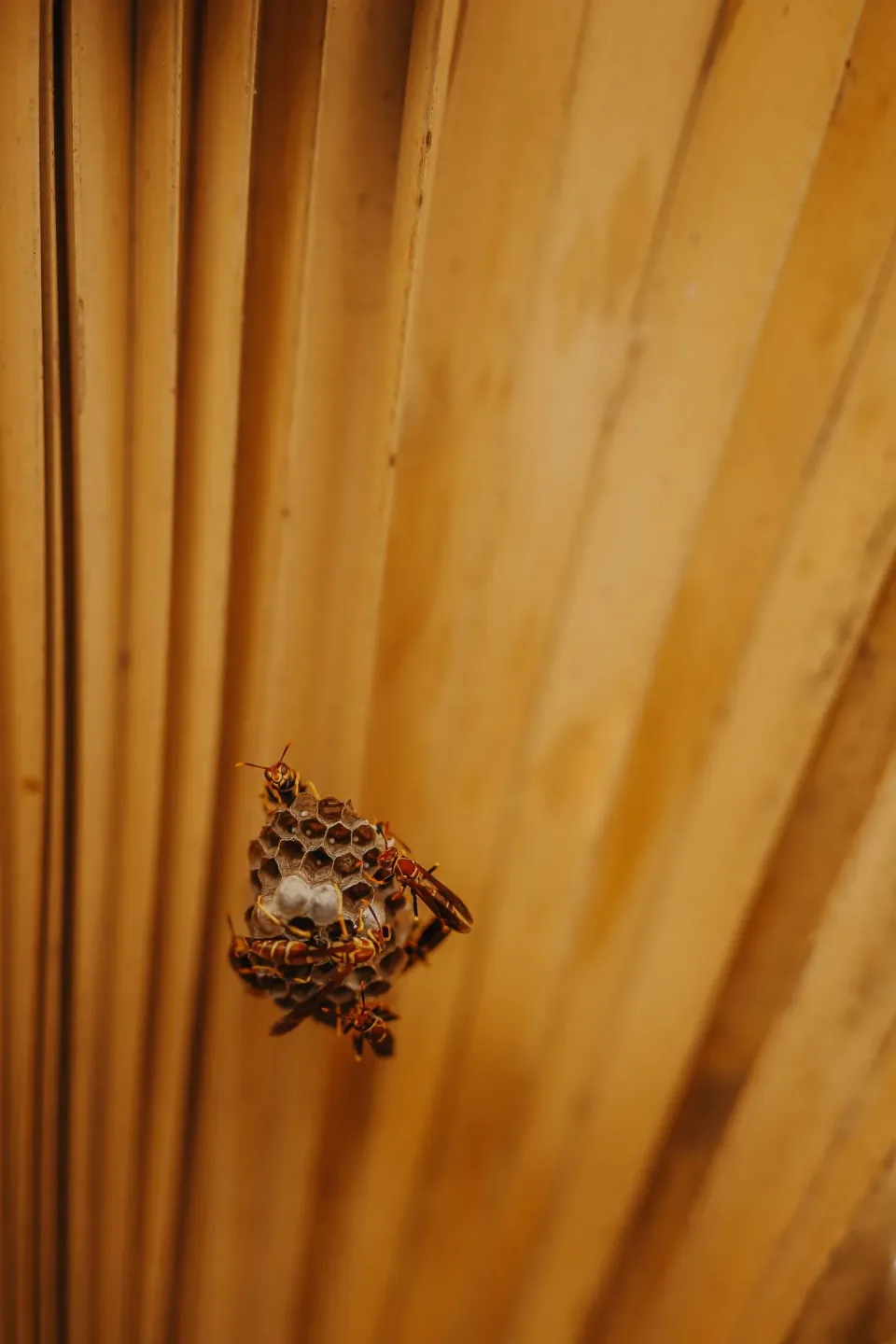
Wasp nest identification starts with shape and location. Paper wasps build open, umbrella-shaped combs that hang flat under eaves, and you can often see individual cells from below.
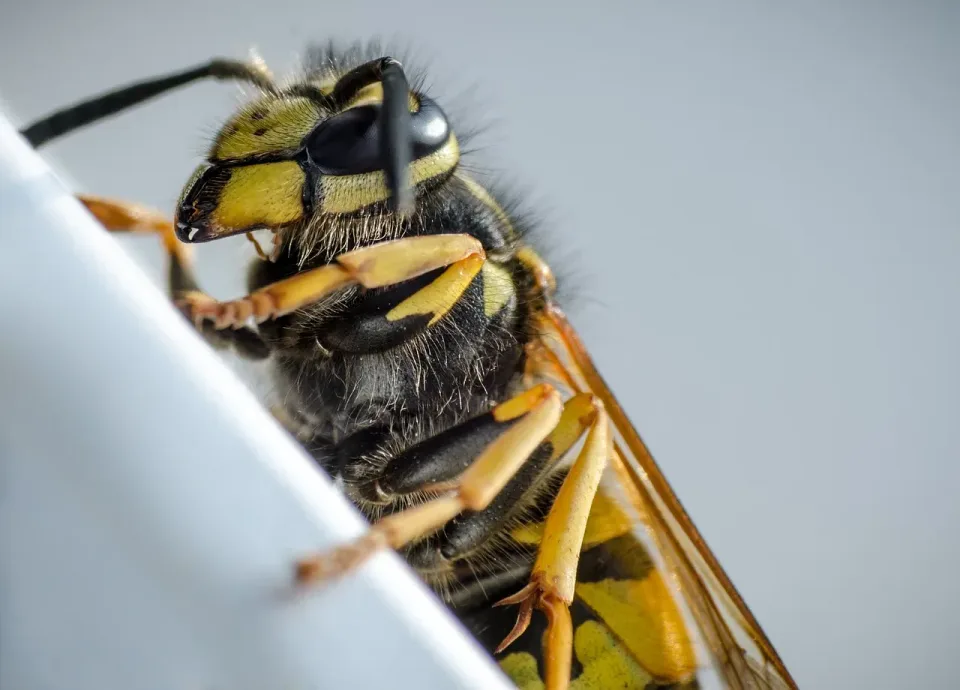
Yellowjackets prefer enclosed cavities, which is why a gap under an eave or a hole in soffit often hides a colony you never actually see. Bald-faced hornets build the familiar gray, football-shaped enclosures.
Getting this wrong matters because each species defends differently, and an enclosed nest means the colony is far larger than what you can observe. We identify the species before quoting any treatment, because the product and approach differ.
Entomologists like Leland Ossian Howard built much of the early American science of economic entomology on exactly this principle: know the insect before you fight it.
When Should You Put Down the Spray Can and Call a Pro?
Call a professional whenever the nest is above a safe ladder height, inside a structure, or larger than a baseball. The failure mode we see repeatedly is the homeowner who sprays at dusk, gets partial kill, and returns the next morning to an agitated colony guarding a now-contaminated nest. A mature yellowjacket colony can hold hundreds of workers, and unlike a paper wasp comb, you cannot see how big it is from the outside.
There is also a seasonal angle. Massachusetts winters are cold enough that snow and ice limit exterior treatments, which means late-season nests sometimes go quiet on their own. But summer is the wrong season to gamble, and in dense urban neighborhoods with older buildings and shared walls, a colony in one eave can spread traffic to neighboring porches.
What Does Professional Wasp Removal Actually Involve?
Professional wasp removal is not just spraying harder. Our licensed technicians apply EPA-registered products according to label directions, treat at the right time of day when most of the colony is inside, and remove the comb so scouts cannot reoccupy it.
We also check the eave gap itself, because the same opening that admitted wasps will admit other pests later. That is the difference between a one-time kill and an actual fix.
If you are dealing with a separate rodent issue at the same property, exclusion work matters there too see our guide on Scratching in Boston Bedroom Walls: Could It Be Mice? for how entry gaps drive indoor problems.
Why Does Nest Location Change the Whole Decision?
Location drives risk more than species does. A paper wasp comb on a low porch rail is a weekend project with the right product and timing.
The same species nesting ten feet up under an eave, where a startled reaction sends you off a ladder, is where most injuries happen. Falls cause more harm than stings in DIY removal attempts, and that is not a trade we recommend making.
If the nest sits over a frequently used door, a child’s play area, or a porch you use for evening meals, professional removal is the practical call regardless of nest size. Our Wasp Nest Removal team treats these jobs routinely, usually in a single visit.
Comparing Treatment Options for Eave and Porch Nests
Not every treatment fits every nest. The right choice depends on species, location, and whether the colony is exposed or hidden inside a cavity.
Species identification before treatment is the step that prevents wasted product and angry colonies spraying a liquid residual into an open-air paper wasp comb works differently than dusting an enclosed yellowjacket void. Here is how the common options stack up:
| Option | Best for | Key detail |
|---|---|---|
| Liquid residual treatment | Exposed paper wasp combs on rails or low eaves | Treats contact areas and leaves a lasting surface |
| Wasp nest removal (physical) | Accessible, inactive or small nests | Comb removed so scouts cannot reoccupy |
| Dust application into voids | Yellowjackets inside eave or wall gaps | Reaches hidden colony depth sprays cannot |
| Gel bait application | Colonies foraging widely around a yard | Workers carry bait back to the nest |
| Mosquito barrier treatment | Sharing the yard with biting pests in summer | Perimeter foliage application, separate service |
Termite baiting monitors colonies while liquid barriers treat soil the same monitor-versus-treat logic applies here: confirm what you are treating before you spend money on product.
How Do You Prepare for a Wasp Nest Removal Visit?
Preparation takes ten minutes and makes the treatment faster and safer for everyone, including your pets. Documented inspection findings guide what we treat, so the more you can tell us about traffic patterns, the better. This matters especially in dense neighborhoods with older buildings and shared walls, where one eave can serve multiple units a situation common around rentals and family homes from Boston to the Connecticut River Walk and Bikeway corridor, where humid summers also support mosquitoes, ticks, and moisture pests that complicate outdoor time.
-
Confirm activity before scheduling: Note where wasps enter and exit for a day or two a single gap under the eave tells us the colony location.
-
Clear the treatment zone: Move furniture, grills, and planters away from the porch so we have unobstructed access to the eave line.
-
Report pets and sensitive occupants: Tell us about aquariums, dogs, or family members with sting allergies before we arrive.
-
Keep children and pets away from active treatment areas: Plan indoor activities for the treatment window.
-
Follow re-entry instructions: We will tell you when the porch is safe to use again based on the product label.
-
Schedule follow-up when monitoring indicates activity: Insect glue boards or a return check confirm the colony did not rebuild.
One honest note: a quick walk-through before we treat costs nothing and prevents repeat visits.
Ready to Get That Porch Back From the Wasps?
Picture the scenario: it is August, you want the porch for a cookout, and wasps are dive-bombing anyone who crosses under the eaves. If the nest is overhead, hidden, or bigger than a baseball, professional removal is the safer and cheaper path a failed DIY attempt usually means paying for treatment anyway, plus a second visit to deal with an agitated colony. Pet-aware treatment planning matters here too, since we time re-entry so dogs and cats are not tracking treated surfaces through the house.
Before you call, check three things: where the wasps enter, roughly how high the nest sits, and whether anyone in the home has sting allergies. Then reach out.
Massachusetts Pest Pros handles wasp nest removal across the state, from Boston triple-deckers to coastal homes near the Nantucket Whaling Museum, with the same plain-language approach we bring to every job. Call (855) 681-0299 or contact us for an inspection and a clear quote.