Skip to content
House Flies — Pest Control

Pest Control · Holyoke, MA

Pest Control in Holyoke, MA for Rat Extermination, Ant Extermination and Carpenter Ant Treatment

Holyoke's housing stock tells you where the pests will be. The brick mill complexes along the canals, the triple-deckers in Elmwood and Springdale, and the Victorian wood-frame homes near Wistariahurst Museum all share one trait: gaps that open up as the four-season inland climate works on them.

  • Serving since 2016
  • Massachusetts pesticide applicator licensing
  • National Pest Management Association membership

Request a quote

Tell us what you need and we will call you back.

Request a quote

We have spent more than a decade treating those exact buildings. Most calls we get in the Highlands and Rock Valley start the same way scratching inside a bedroom wall at night, or a line of ants crossing the kitchen counter. Both point to entry points that need closing, not just spraying. Our team inspects first, explains what we find in plain language, and matches the treatment to the pest instead of guessing. Drought stretches matter here too. When rain is scarce, pests move toward irrigated yards and damp basements, so we check exterior water sources during every visit. Call (855) 681-0299 and we will schedule an inspection for your Holyoke property, usually within a few days.

Who Handles Pest Problems in Holyoke, MA

Holyoke sits between Mount Tom State Reservation and the Holyoke Dam, and that geography shapes pest pressure. Sudden downpours can flood basements and disturb rodents, pushing rats and mice from storm drains and river-adjacent lots into the older buildings near Holyoke Heritage State Park.

Dense blocks of triple-decker housing combine shared walls with century-old foundations, so a problem in one unit rarely stays there. Our team treats these connected buildings as a system, not room by room.

Scheduling is straightforward: one call sets an inspection, we identify the pest before treating, and you get a written explanation of what attracted it and how to prevent a repeat. Expect clear access requirements, honest findings, and follow-up prevention steps never a sales pitch for work you do not need.

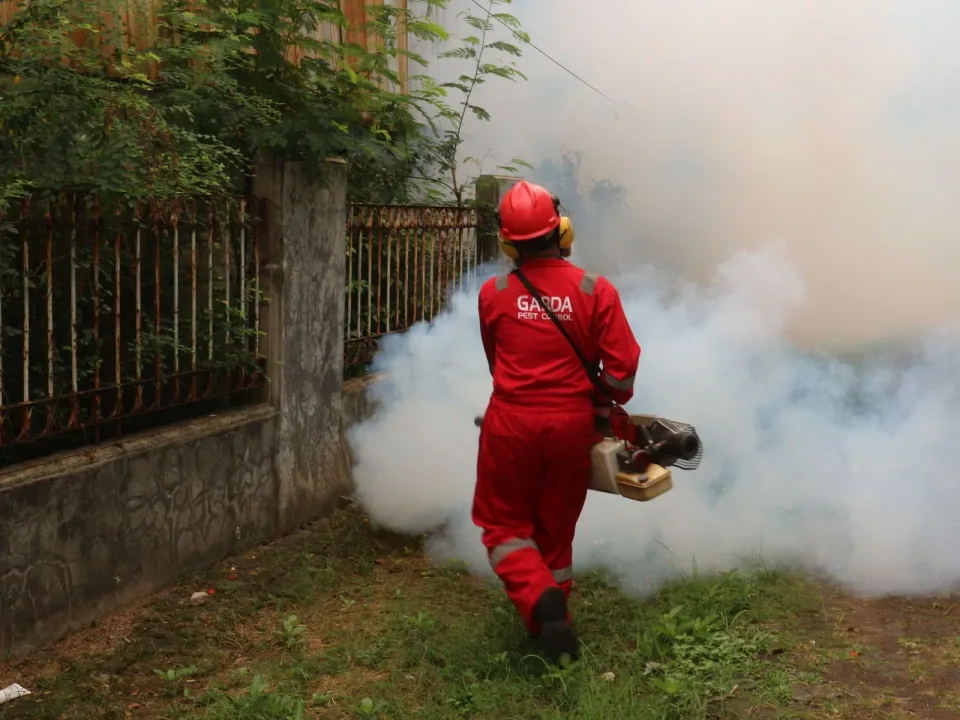
Pest Control Technician — Outdoor Service

How to Get Common Pest Jobs Done in Holyoke

Three situations bring most Holyoke customers to us. First, rodents in older housing: Holyoke’s cold winters and snow cover can conceal exterior entry points, so mice slip into foundations unnoticed and set up in wall voids before anyone sees a dropping.

We inspect, seal, and bait. Second, spring ant invasions: freeze-thaw cycles expose foundation gaps each year, and pavement ants and carpenter ants follow those cracks straight to kitchens.

Third, summer moisture pests: humid summers support mosquitoes, ticks, and moisture pests, especially in yards near the Connecticut River lowlands.

A typical service sequence looks like this:

  • Identify the pest and the entry route before any product goes down.
  • Treat the active problem with the method that fits the species.
  • Exclude and seal so the next season starts harder for them.
  • Recheck on a follow-up visit to confirm the fix held.

We cover all of Holyoke, including 01040 and 01041, with the same inspection-first approach whether the job is a single-family Victorian or a mill loft conversion.

Why Does Holyoke's Heating Season Drive Rodents Indoors?

Holyoke’s long heating season is the answer. From late fall through March, cold pushes rats and mice toward warmth, and once they are inside a wall void they stay. Homes near Mount Tom State Reservation back up to wooded edges where field rodents overwinter, while buildings downtown by the International Volleyball Hall of Fame deal with rats moving between older masonry structures through shared utility chases.

Summer flips the problem.

We follow EPA Integrated Pest Management principles on every job: inspect first, exclude second, treat last, and use the least product that solves the problem. That matters in Holyoke’s dense blocks, where a broadcast spray in one unit can push cockroaches into the neighbors’ walls instead of eliminating them.

Check your own foundation each October for gaps wider than a pencil that is all a mouse needs. When you find one you cannot seal yourself, call us at (855) 681-0299.

Neighborhoods We Serve Across Holyoke

Our crews cover every part of the city, and each area brings its own pest pattern. In Elmwood, the triple-decker housing means rodent exclusion often has to happen across all three units at once to hold.

Rock Valley’s Victorian wood-frame homes hide carpenter ant galleries in porch framing and soffits that owners rarely see until frass appears. Great Swamp properties sit low and damp, so basement moisture pests and mosquitoes need attention every warm season.

In Oakdale, mature tree cover drops heavy fall leaf litter that shelters both rodents and ticks close to foundations. The Highlands mixes older single-family homes with wooded lots, where mice move indoors as temperatures drop.

Highland Park’s hillside homes deal with ants trailing in along foundation cracks exposed by freeze-thaw. Wherever you are in Holyoke, the same inspection-first pest control process applies we identify the pest, explain the cause, and fix the entry, not just the symptom.

Why us

Local Pest Control in Holyoke, MA

Holyoke homes deal with old foundations, river moisture, and pests that shift with every season, and our crew treats each call that way.

We Confirm First

Every job starts by identifying the exact pest before any product goes down. Treating the wrong insect or rodent wastes your money and leaves the real problem untouched, so we verify what we are dealing with on day one.

Clear Explanations

Our technicians walk you through what they found, which treatment options fit, and what you can do to keep the problem from coming back. You get the findings in plain language, not a sales pitch you have to decode.

Local Route Scheduling

We coordinate inspection and treatment routes across Massachusetts, so Holyoke customers know when to expect the visit instead of waiting around all day. Follow-up inspections get scheduled the same way, based on what the monitoring shows.

Our process

How a visit works

Here is how a typical job moves from your first call to a finished treatment.

01

Confirm the Pest

Before selecting any treatment, we verify the target pest. Droppings, damage patterns, and harborage sites tell us whether you are dealing with mice, roaches, ants, or something else, and that answer shapes everything that follows.

02

Inspect and Explain

The technician checks entry points, moisture conditions, and activity areas, then explains what the inspection turned up. You hear where pests are getting in, what is attracting them, and which treatment options make sense for your situation.

03

Treat and Seal

We apply treatment to the confirmed activity areas and point out practical steps for sealing entry points or cutting back the conditions drawing pests in. You get a short list of fixes, like gaps to close or food to store.

04

Monitor and Follow Up

When monitoring shows continued activity, we schedule a follow-up inspection to check the treated areas and adjust as needed. You are not left guessing whether the work held; the next visit is set before we leave.

Typical jobs

Typical jobs in Holyoke, MA

Across pest control calls, the most common reasons people reach out are general pest control, rodents and ants.

Typical job

Bed bugs turning up in a rental

The crew inspects mattress seams, box springs, and furniture in the affected unit, then explains what an infestation at that stage requires. Heat treatment is discussed as an option, with the scope of the job laid out before any work is quoted. The property owner receives a clear estimate based on what the inspection actually found, not a guess over the phone. Tenants get simple prep steps, like laundering bedding and clearing clutter around sleeping areas, before treatment day arrives.

Typical job

A gray paper nest hanging from a

A technician confirms the nest belongs to bald-faced hornets before choosing a treatment, since the approach differs from yellowjackets or paper wasps. The nest sits several feet up, so the crew treats it with the right equipment instead of improvising from the ground. The nest is treated directly and the customer is told to keep kids and pets clear of the area until activity stops. The technician also checks the yard for a second nest, since aerial colonies often appear in more than one spot.

Warning signs

Warning signs to watch for

Mud tubes on the foundation

Mud tubes along the foundation or basement walls are one of the clearest signs of termite activity. These pencil-width tunnels let termites travel between soil and wood while staying moist. Break one open and check for live insects, then call for an inspection before the damage spreads into framing.

Roaches after dark

Cockroaches that scatter when you flip on a light at night usually mean a population is established behind appliances or inside wall voids. Daytime sightings signal a heavier infestation. Look for pepper-like droppings near the stove, under the sink, and along hinge gaps before the problem grows.

Ant trails on counters

Ants marching in a line across the kitchen counter are following a scent trail back to a nest, often one hidden in a wall or beneath the slab. Wiping the counter removes the visible ants but not the colony. Tracing the trail to where it enters the wall helps target treatment.

Through the year

Pest pressure through the year

Spring

Warmer soil pulls ant colonies out of their winter depths and toward kitchens and basements, especially in older homes near the Connecticut River where ground moisture stays high. Spring is also when termite swarmers appear. Booking an inspection now catches trails and mud tubes before colonies settle in for the season.

Summer

Ticks pick up in tall grass and field edges across the Pioneer Valley, and wasps build nests under eaves and in trees through the warm months. Aerial nests grow fast at this time of year. Summer treatments focus on yard perimeter work and knocking down colonies while they are still small.

Fall

Cooling nights push mice, cluster flies, and other overwintering pests toward wall voids, basements, and attic gaps. Flooding along the river can also displace rodents toward drier structures. Fall is the best window for sealing entry points, because every gap you close now is one less pest riding out the winter indoors.

Winter

Cold weather drives rodents deep into wall cavities and basement utility lines, where they stay active all season. Cockroaches concentrate around warm appliances. Winter is a good time for interior inspections and follow-up monitoring, since activity is easier to trace when pests are confined to predictable indoor routes.

Before you hire

Questions to ask before you hire

Q1

Are your applicators licensed in Massachusetts?

Massachusetts requires pesticide applicator licensing, and a licensed technician applies products according to the label and state rules. Ask who will actually perform the treatment and confirm that person holds the license, not just the company office.

Q2

What do I need to do before the visit?

Interior treatments usually require storing food and dishes, moving pets and aquariums away from treated areas, and keeping children clear during re-entry intervals. A provider who spells this out ahead of time makes the appointment go faster and safer.

Ready to get started?

Call to talk through your job in Holyoke.

10+

Years serving Holyoke

21

Areas served

FAQ

Pest Control FAQs in Holyoke, MA

Straight answers for customers in Holyoke on pricing, delivery, and scheduling.

Do you serve both 01040 and 01041 in Holyoke?

Yes. We cover all of Holyoke, including both 01040 and 01041, from the canal district to the Highlands and Rock Valley. Same-week inspections are usually available call (855) 681-0299 to schedule.

Why do I keep getting mice even after setting traps?

Traps remove the mice you see, but a mouse enters through a gap about 1/4 inch wide, so new ones keep arriving until the entry points are sealed. Our rodent exclusion work finds and closes those gaps, then bait stations handle the remaining activity.

Are the treatments safe for kids and pets in a triple-decker?

In shared-wall buildings we favor crack-and-crevice treatments and tamper-resistant bait stations placed where children and pets cannot reach them, and we tell you exactly when rooms are safe to reenter.

What does pest control cost in Holyoke?

It depends on the pest, property size, and access. Mouse work typically runs $200–$600 with entry-point sealing and follow-up, rat jobs $300–$900 depending on infestation and exclusion, ant treatments $150–$400, and termite treatment $800–$3,000 based on structure size. Final quotes vary by infestation, property access, treatment method, and site conditions.

ZIP code

ZIP Codes We Serve in Holyoke, MA

Pest Control covers every ZIP code in Holyoke, MA.

0104001041
Local Leadership

Meet Your Local Experts

Daniel Mercer Lead Expert

Massachusetts Pest Pros

"Clear Answers. Targeted Pest Control."

I started in pest control working in Boston homes, where old foundations, shared walls, and basement utility lines often give rodents and insects a way inside. I built my work around explaining what I find and how to prevent a repeat problem, then expanded service across Massachusetts to address seasonal issues like spring ants and summer ticks.

10+ years experience Massachusetts pesticide applicator licensing National Pest Management Association membership
Get a Quote

Get a Pest Control Quote in Holyoke, MA

Share job details below or call our team directly. Phone: (855) 681-0299

Call Us

(855) 681-0299

Our Location

Holyoke, MA

Working Hours

Mon–Sun 8am–8pm

Nearby Cities

Service Areas Within 30 Miles of Holyoke

Pest Control is also available in these nearby communities.