Why Are There Mud Tubes Along My Foundation?
You spotted pencil-width dirt tunnels climbing the concrete near a downspout, and now you’re wondering if the house is in trouble. Mud tubes mean subterranean termites are traveling between the soil and your structure. They build those shelter tubes to keep moisture in while they commute from the ground to the wood above.
We see this around triple-deckers near Boston Logan International Airport and older coastal homes up by the Cape Ann Museum, wherever damp soil sits against a foundation. Break one open and check for live workers but don’t stop there. A full inspection tells you whether the colony is active, abandoned, or working a second tube you haven’t found yet.
What Builds a Mud Tube, and Where Do They Show Up?
Mud tubes are earthen highways subterranean termites build to cross exposed foundation surfaces without drying out. Finding one is a warning sign, not a verdict but it always deserves a closer look.
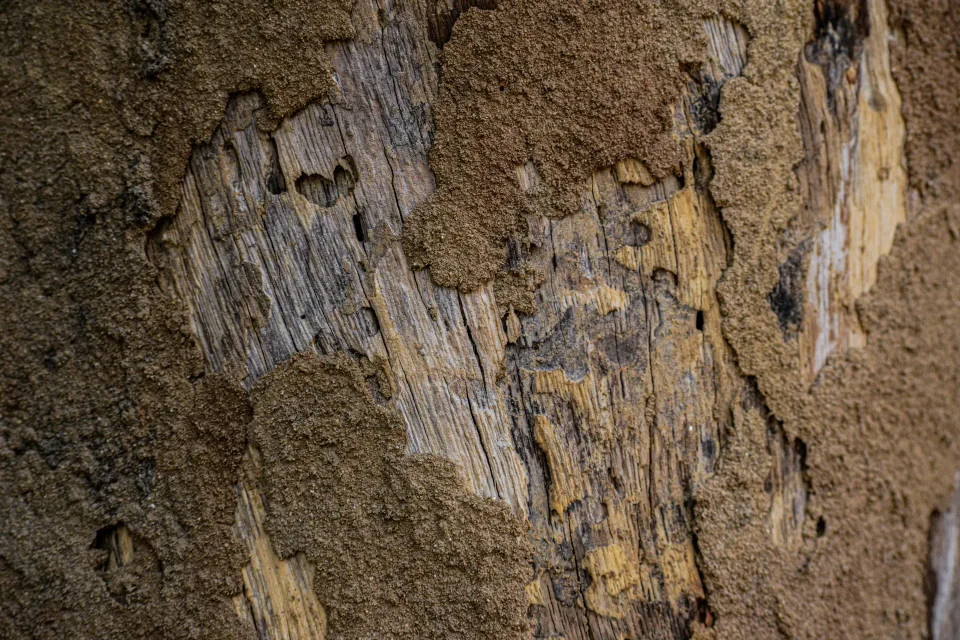
Workers mix soil, saliva, and frass into tunnels the width of a pencil, usually on foundation walls, sill plates, piers, and crawlspace supports. On brick rowhouses near the Massachusetts State House and wood-frame Colonials west of Boston Common, we most often find them where grade sits high against the wall or where a downspout keeps the soil damp. The tube protects termites from light and dry air while they move between the colony underground and the wood they’re feeding on.
There are three types worth knowing. Working tubes are moist and active; exploratory tubes are thin and abandoned quickly; drop tubes hang from ceilings in crawlspaces. Scraping one off tells you less than you’d think the question is whether termites rebuild it.
Why Do Massachusetts Winters and Springs Make This Worse?
Spring freeze-thaw cycles expose foundation gaps that give termites and moisture a way to meet. When the ground heaves and small cracks open at the sill line, the colony doesn’t need much a gap the width of a credit card will do. Homes around Minute Man National Historical Park and older farmhouses near Old Sturbridge Village sit on exactly the kind of aging fieldstone and poured foundations where those gaps show up first.
Snow cover works the other direction. It insulates the soil, which lets subterranean colonies survive our cold winters just below the frost line, ready to move the moment things thaw. That’s why we find fresh tubes in March and April on houses that looked clean in November.
Is It Termites or Carpenter Ants?
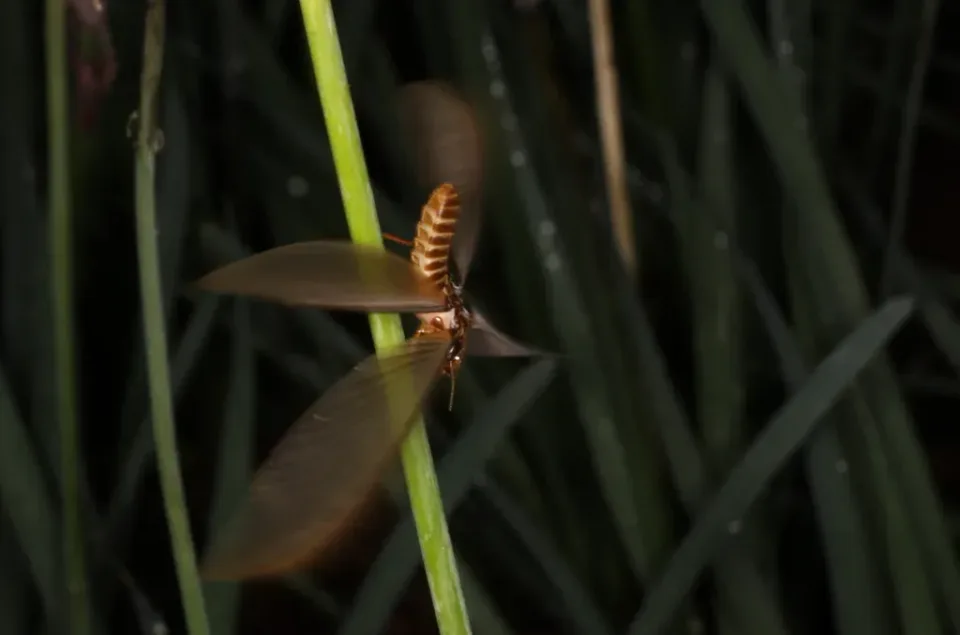
This is the mistake we see most. Homeowners see frass and wood damage and assume one pest when they have the other. Carpenter ants excavate galleries; they do not eat wood they push out coarse, shredded sawdust-like debris. Termites eat the cellulose, so their damage looks gouged and layered, and their swarmers shed uniform, pencil-tip-sized wings on windowsills.
Getting this wrong costs real money, because the treatments differ. Termite swarm activity often increases during spring, so a wing pile in April near a basement window is a strong termite signal. A proper inspection separates the two before anyone spends a dollar on the wrong product.
Should You Break the Tube or Call a Pro?
You can break a small section of tube to check for live workers that’s a reasonable DIY check. Spraying kills the visible workers and can push the colony deeper, which is why we treat the soil and structure as a system rather than chasing tunnels.
Call a pro when tubes appear on more than one wall, when you find shed wings indoors, or when the tube rebuilds within a week of being broken. We run a whole-home termite inspection, map every tube and moisture source, and quote treatment based on structure size and how far the colony has spread. Homes backing up to the Middlesex Fells Reservation or near Harvard University’s older buildings often share soil conditions with neighbors, so we also note whether adjacent properties have a history of activity.
What Does Termite Treatment Cost in Massachusetts?
A small Cape with a shallow slab is a different job than a triple-decker with a full crawlspace. We explain the findings in plain language first, then match the treatment to the colony not the other way around.
Which Treatment Option Fits Your Termite Situation?
The right choice depends on where the colony is and how your foundation meets the soil. Here’s how the common options compare.
| Option | Best for | Key detail |
|---|---|---|
| Termite baiting | Colony elimination over months | Monitoring devices in soil; termites carry bait back to the nest |
| Liquid residual treatment | Fast soil barrier at the foundation | Trenching or drilling along the perimeter |
| Whole-home termite inspection | Confirming activity first | Maps tubes, moisture, and wood contact before treatment |
| Residential perimeter treatment | Preventive coverage for other pests | Barrier applied around the structure’s base |
| Rodent exclusion | Sealing gaps termites and mice share | Closes the same openings both pests use |
Bait stations target the colony at its source; liquid barriers treat the soil contact zone. Humid summers support mosquitoes, ticks, and moisture pests, and that same moisture softens soil-to-wood contact termites love homes near Faneuil Hall and Fenway Park with damp basements face both problems at once. Sudden downpours can flood basements and disturb rodents, which is why we often check for both during one visit.
How Do You Prepare for a Termite Inspection?
A little prep makes the inspection faster and the findings more accurate. Five steps cover it:
-
Confirm the target pest: photograph the tube and any shed wings before your appointment so the inspector can verify species on arrival.
-
Provide crawlspace and attic access: clear stored boxes away from hatchways most tubes we miss are behind storage.
-
Clear the foundation line: pull back mulch, tarps, and stored firewood so the perimeter is visible for a full check.
-
Secure food and dishes: store pantry items in sealed food-grade storage containers before any interior treatment follows.
-
Schedule follow-up monitoring: book the return visit when monitoring indicates activity, not just when the calendar says so.
Dense urban neighborhoods combine older buildings and shared walls, so a rowhouse near South Station or a triple-decker by the Nantucket Whaling Museum’s mainland cousins may need the neighbor’s foundation checked too. Even a walk along the Connecticut River Walk and Bikeway shows how many older floodplain homes sit on damp soil the same conditions that feed termite tubes.
Ready to Get That Mud Tube Checked?
A mud tube on your foundation is the termite colony telling you where it travels. The takeaway is simple: confirm whether it’s active, fix the moisture that feeds it, and treat the colony not just the tunnel. Spring is when swarm activity peaks, and snow cover can conceal exterior entry points all winter, so a tube found in April may have been building since February.
Massachusetts Pest Pros runs whole-home termite inspections across the state, from Salem Maritime National Historic Site’s surrounding neighborhoods to coastal towns where wet springs can increase standing-water mosquito breeding sites and crawlspace dampness alike. We explain what we find in plain language and quote before any work starts.
Call (855) 681-0299 or book a termite inspection with our team today.